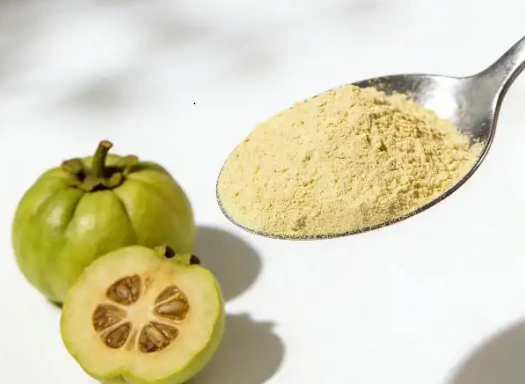
What Garcinia cambogia actually is
Garcinia cambogia (also called Garcinia gummi-gutta) is a small, pumpkin-shaped fruit native to South and Southeast Asia, traditionally used in cooking for its sour flavor. The rind of the fruit contains hydroxycitric acid (HCA), the compound of primary interest in weight-management supplements.
How HCA is thought to work
HCA is studied for inhibiting an enzyme called citrate lyase, which the body uses in the process of converting excess carbohydrates into fat. By potentially reducing this enzyme's activity, HCA is proposed to shift more carbohydrate energy toward glycogen storage and away from new fat synthesis.
Research context: Some clinical trials on HCA supplementation show modest improvements in appetite control and small reductions in body weight; others show no significant difference from placebo — the research picture is genuinely mixed.
The appetite and satiety angle
Separately from the fat-synthesis mechanism, HCA is also studied for a possible effect on serotonin levels, a neurotransmitter involved in mood and appetite regulation — the proposed basis for Garcinia's reputation as an appetite suppressant, though this research is less extensive than the enzyme-inhibition studies.
Being honest about the research picture
Garcinia cambogia is one of the more heavily marketed weight-loss ingredients, and the marketing has often outpaced the evidence. The most balanced reading of the research: modest, inconsistent effects across studies — worth including as one component of a broader formula, not a guaranteed solo solution.
Dosing and standardization
Most studied doses use extracts standardized to 50-60% HCA content, typically dosed multiple times daily before meals in research protocols — timing intended to maximize the enzyme-inhibition window around carbohydrate intake.
Who might notice the most difference
Individuals whose weight-management difficulty centers more on between-meal snacking and appetite than on metabolic rate specifically may be the population where Garcinia's proposed satiety mechanism is most relevant — though individual response varies considerably.
Different forms of HCA in supplements
HCA appears in supplements in a few different salt forms — commonly as HCA-SX, a patented calcium-potassium salt studied for improved absorption compared to the free-acid form. Formulation matters here: a Garcinia extract's effectiveness depends not just on its HCA percentage but on how bioavailable that HCA actually is once ingested.
Setting the right expectations
Given the mixed research picture, Garcinia is best framed as a supportive component addressing appetite and fat-storage enzymes from a different angle than the formula's thermogenic ingredients — a complementary mechanism, not the centerpiece of the formula's expected effect.
Five Ingredients, One Daily Capsule
Non-GMO. Made in the USA. 60-day guarantee.
Order Now — From $49