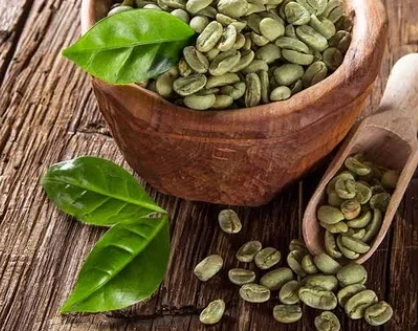
What makes green coffee different
Green coffee beans are simply unroasted coffee beans. Roasting, while it develops coffee's familiar flavor, also degrades a compound called chlorogenic acid — present in much higher concentrations in the raw, green bean. That's the primary reason green coffee bean extract is used separately from regular roasted coffee in supplement formulas.
How chlorogenic acid is thought to work
Chlorogenic acid is studied for its role in moderating glucose absorption in the intestine, slowing the release of glucose into the bloodstream after a meal. The proposed downstream effect is that with less readily available sugar for fuel, the body may rely more on stored fat.
Research context: Human studies on chlorogenic acid supplementation show modest reductions in body weight and fat percentage over several weeks compared to placebo, though effect sizes vary across trials.
The blood sugar connection
Beyond weight, chlorogenic acid has also been studied for a supporting role in glucose metabolism more broadly — relevant to the same blood-sugar-stability mechanisms that influence cravings and energy consistency throughout the day.
Does green coffee extract still contain caffeine?
Yes — green coffee beans naturally contain caffeine, though typically standardized extracts specify their chlorogenic acid content as the primary active marker, with caffeine as a secondary, usually smaller, component compared to a dedicated caffeine anhydrous ingredient.
A note on research quality in this space
Green coffee bean extract research has included some studies with design limitations, and the supplement industry has occasionally overstated findings in marketing. The more conservative, better-designed trials still show a modest supportive effect — meaningful as part of a broader formula, not a standalone dramatic solution.
Why standardization matters
Look for extracts standardized to a specific chlorogenic acid percentage (commonly 45-50%) — this ensures the dose used in research is actually what's delivered, rather than a vaguely sourced "green coffee" ingredient with unknown active compound levels.
The antioxidant properties worth mentioning
Beyond its glucose-moderating role, chlorogenic acid is also a polyphenol with documented antioxidant activity — relevant to general cellular health during the metabolic changes that come with weight loss, even though this isn't the primary reason it's included in weight-management formulas specifically.
Why it pairs well with other formula ingredients
Green coffee bean's glucose-moderation mechanism is distinct from the direct thermogenic pathway of caffeine or the appetite-focused mechanism of Garcinia — meaning it addresses a different piece of the metabolic picture rather than duplicating what other ingredients in a combination formula are already doing.
Five Ingredients, One Daily Capsule
Non-GMO. Made in the USA. 60-day guarantee.
Order Now — From $49